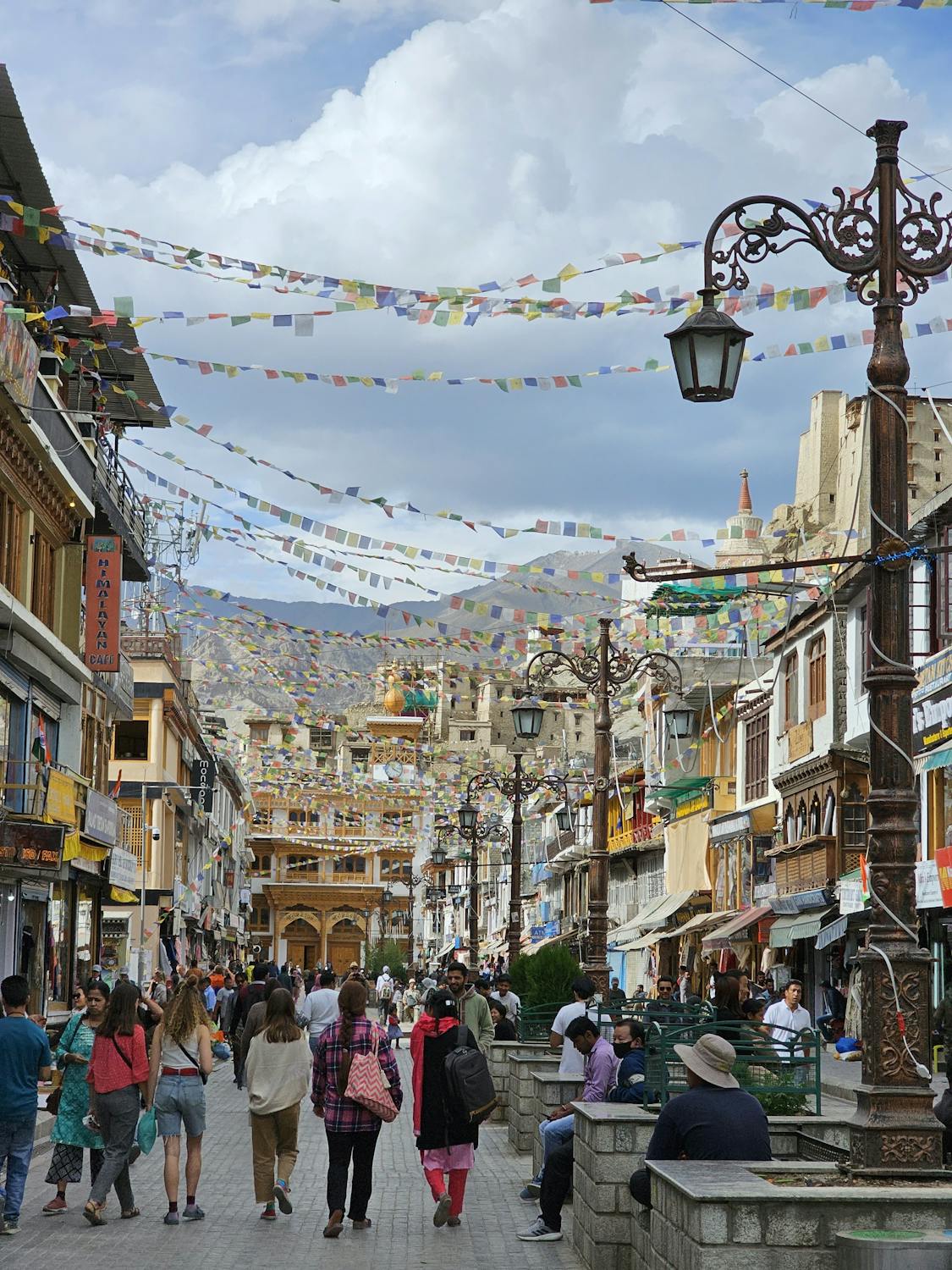
As you move through the narrow alleys on your Leh city heritage walk, you’ll pass homes that have stood for centuries. Built from sun-dried mud bricks, timber and stone, these traditional Ladakhi houses keep cool in summer and hold warmth in winter.
The thick wooden doors, small windows and slightly sloped roofs tell you how people adapted to their tough surroundings using what was available. Some homes have prayer flags fluttering on top, sending hopes into the mountain wind.
The scent of wood smoke spreads in the air as you walk past traditional kitchens. In one corner, an old woman might be spinning yak wool. In another, children play with marbles under fading murals painted directly on walls.
You’ll feel the coarse texture of old mud-plastered walls if you brush your hand against them. There’s a quietness here that contrasts sharply with the newer parts of Leh.
Along the way, you’ll also pass a small lane filled with local produce like dried apricots, barley, wild spinach and bundles of other fresh vegetables from nearby farms.
You may even smell wild herbs drying on a rooftop. It’s a slice of Ladakh’s food culture that often goes unnoticed. There’s a rhythm to the chaos with shopkeepers calling out prices, tourists bargaining, locals walking by with confidence.
You’ll hear Ladakhi spoken between shopkeepers, the tone steady and calm. You may also catch snippets of stories about harvests, pilgrimages and border roads.
This heritage walk is not rushed. You’ll pause, observe and talk to locals and hear their beautiful stories. It’s a reminder that Ladakhi culture is alive, evolving and strongly reflected in everyday life.