
Rural Japan: Samurai Legacies & Sacred Mountains
Curated & Hosted By
Tachibanaya
Location
Tohoku
Japan
Duration
4 Days/3 Nights
Price Starts At
TBA
About The Journey
Journey Details will be added soon

CURATED & HOSTED BY
Tachibanaya
Tohoku, Japan
STANDARD PRICE
TBA
3 Nights / 4 Days, Double occupancy
9 EXPERIENCES | ALL INCLUSIVE
The moments that make
this journey
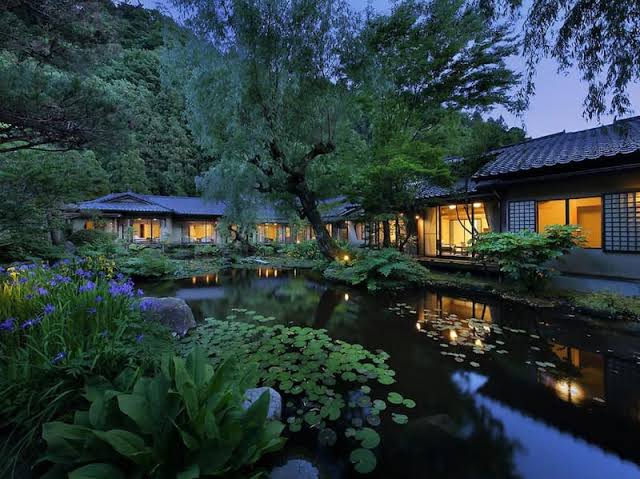
Tachibanaya has taken in guests for about 370 years, and its name reaches back further still — to a poem in the Manyoshu, Japan's oldest verse anthology, by Emperor Shomu, who reigned in the eighth century; the lines are set into a pillar in the entrance hall where you are received. Tachibana is the wild citrus that runs through classical Japanese poetry. The inn sits in Atsumi Onsen, a hot-spring town worked for well over a thousand years, the bathing water long drawing writers north to the Sea of Japan coast. Soak first, then walk the small town along the river. Dinner comes to your room in the ryokan manner.

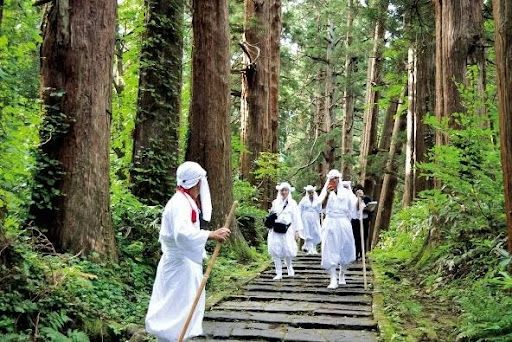
Pilgrims have climbed Mount Haguro since 593, when Prince Hachiko, a son of an emperor, is said to have opened these three sacred mountains to worship. You go up with a yamabushi, a mountain ascetic of Shugendo, the old practice that fuses nature worship and esoteric Buddhism. The path is 2,446 stone steps through a cedar avenue; partway stands the Grandpa Cedar, over a thousand years old, and a five-storey wooden pagoda, a National Treasure rebuilt in 1369 and never painted. Haguro is the mountain of the present in a pilgrimage of rebirth — Gassan the past, Yudono the future. Take the steps slowly; the cedars are as much the point as the summit.
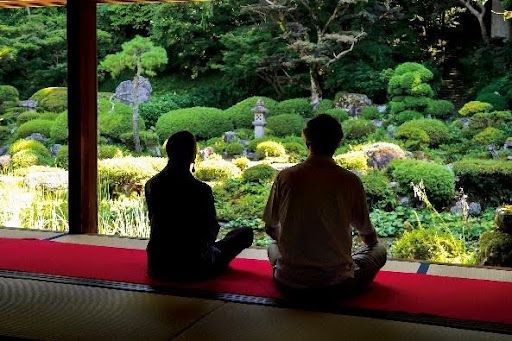
Gyokusenji was founded in 1251 by a priest who had studied Zen in China and trained under Dogen, who brought Soto Zen to Japan. Its garden — pond, stone, the mountain borrowed behind — is a nationally designated Place of Scenic Beauty, recognised in 1987, and the temple is known locally as the flower temple for what comes up through the year. The chief priest hosts the tea: matcha whisked to a froth, a seasonal sweet, the quiet of a room that opens straight onto the water. You sit at the garden's edge while it is explained without hurry. Mind the step down to the veranda; the old wood is polished smooth.

After the shogun fell in 1868, the samurai of the Shonai clan were left with no lord to serve. In 1872 about three thousand of them cleared this hillside at Matsugaoka and, in the phrase still used here, put down their swords and took up hoes — turning to silk, and building the northernmost sericulture in Japan. The great wooden rearing barns still stand, three storeys of them, raising silkworms much as they did then; it is a national historic site and the only place in the country that keeps the whole silk process, cocoon to cloth, in one location. Tsuruoka built an identity on this. The discipline that once ran a domain went into the worms instead.

Nezugaseki means the barrier at Nezu, and it was one — among the three ancient checkpoints that guarded the road into Japan's far north. Minamoto no Yoshitsune is said to have slipped through here fleeing his brother in the twelfth century, and the poet Basho passed this coast on his long walk north. You paddle the shoreline below the cliffs, clear water against dark rock, then land near the little shrine island and its lighthouse — certified some years ago as a lovers' sanctuary, which is where the local nickname comes from. The Sea of Japan can turn quickly; the guides read it and keep you in the lee. Go on a calm morning if you can.
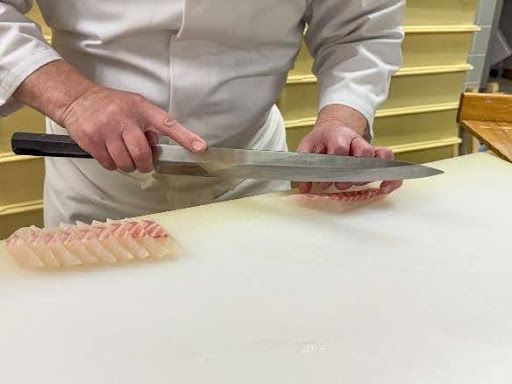
Sakata was one of the great ports of the Kitamae-bune, the northern-bound cargo ships that carried Shonai rice and safflower south to Osaka through the Edo period and came back loaded with goods and money. The harbour still lands Sea of Japan fish each morning — sea bream, tuna, and in summer the wild rock oysters pulled off the coast between June and August. Lunch at a local sushi counter is the short version of that history: the catch, the rice, a little wasabi, not much else. Back at the inn a chef walks you through the knife work behind sashimi — how the angle of the cut changes the texture before anything reaches the plate.
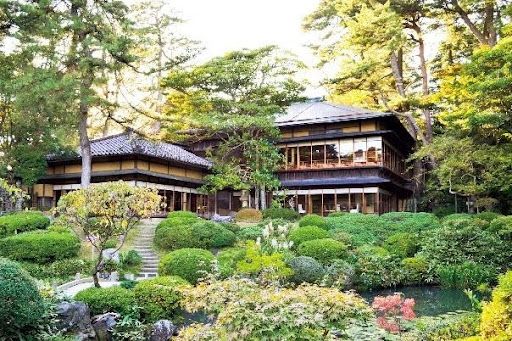
The Honma family of Sakata were once reckoned the richest landowners in Japan — rich enough that the local saying went, I can never be a Honma, but I would at least like to be a lord, ranking a feudal daimyo below them. The fortune came off the Kitamae-bune trade. In 1813 the fourth head built Seienkaku, a Kyoto-style villa and garden, as lodging for the Sakai lords when they came to inspect the domain — the merchants housing the rulers. You walk the residence and the museum on the old estate, the rooms and the planting arranged with the restraint that money this old tends toward. The garden is built to be read from indoors, kneeling.
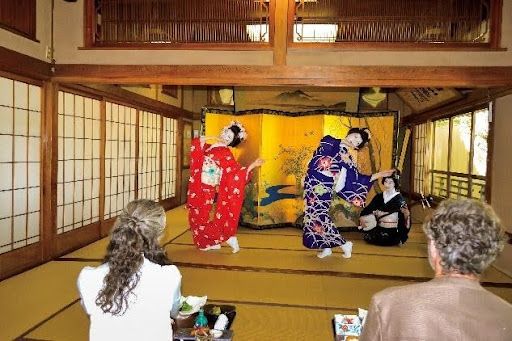
The maiko who dance at Somaro are the surprising end of the trade story: the Kitamae-bune ships brought Kyoto's entertainment culture north, and Sakata's merchants kept geisha and maiko much as the capital did. The original teahouse on this spot, Soma-ya, hosted more than a hundred and fifty of them. The building you sit in was rebuilt after the great fire of 1894 and is now a registered cultural property; the maiko perform twice a day to live shamisen, and a kaiseki meal of the region's seasonal dishes comes with it. Watch the feet — the small, precise steps are the years of training. This is a far northern port, not Kyoto, which is the whole point.
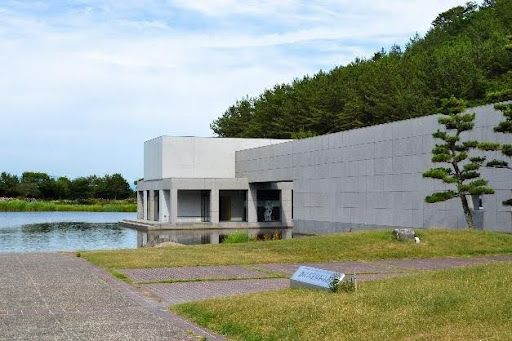
Domon Ken, born in Sakata in 1909, was one of Japan's hardest-looking realist photographers — temples, potters, the faces of ordinary postwar life. When he gave his whole archive to his home town, Sakata built him this museum in 1983, said to be the first anywhere raised for a single photographer. The building is Yoshio Taniguchi's, low and quiet against a reflecting pool; the landscape garden is Hiroshi Teshigahara's, and a stone sculpture in the courtyard is by Isamu Noguchi — three of the century's serious hands on one small site. A curator opens the archive and the stories behind the prints. Go slowly; the photographs reward the attention he gave them.
Starting Package Price
STANDARD PRICE
TBA
3 Nights / 4 Days, Double occupancy
Inclusions
TBA
Exclusions
TBA
Ready to experience
Tachibanaya?
QUESTIONS
Frequently
asked
A Postcard Journey is a curated, all-inclusive itinerary hosted by the property itself. Every day is thoughtfully planned — your stay, experiences, and the moments in between — so you can simply arrive and immerse yourself in the destination.
Booking a hotel gives you a room. A Postcard Journey gives you a complete, day-by-day experience crafted by the people who know the destination best — the property's own team. Experiences, meals, and local encounters are woven into one seamless itinerary.
Yes. Dates, room categories, and experiences can be tailored to you. Whether you are celebrating a special occasion, travelling with family, or have dietary or accessibility needs, share them with us in your inquiry and we will shape the journey around you.
Send us an inquiry from this page with your preferred dates and number of guests. Our team, together with the property, will confirm availability and finalise the details with you. There is no payment required at the inquiry stage.
Yes. StarLife members enjoy exclusive member pricing on every Postcard Journey, along with member-only benefits and privileges at our partner properties.
TBA