
Wallawwa ♦ Colombo · Sri Lanka
Heritage at Wallawwa
4 / 3
Days / Nights
6
Postcards
Postcards
Itinerary


PROPERTY & DAILY RITUALS
Stay in an 18th-Century Sinhalese Manor House
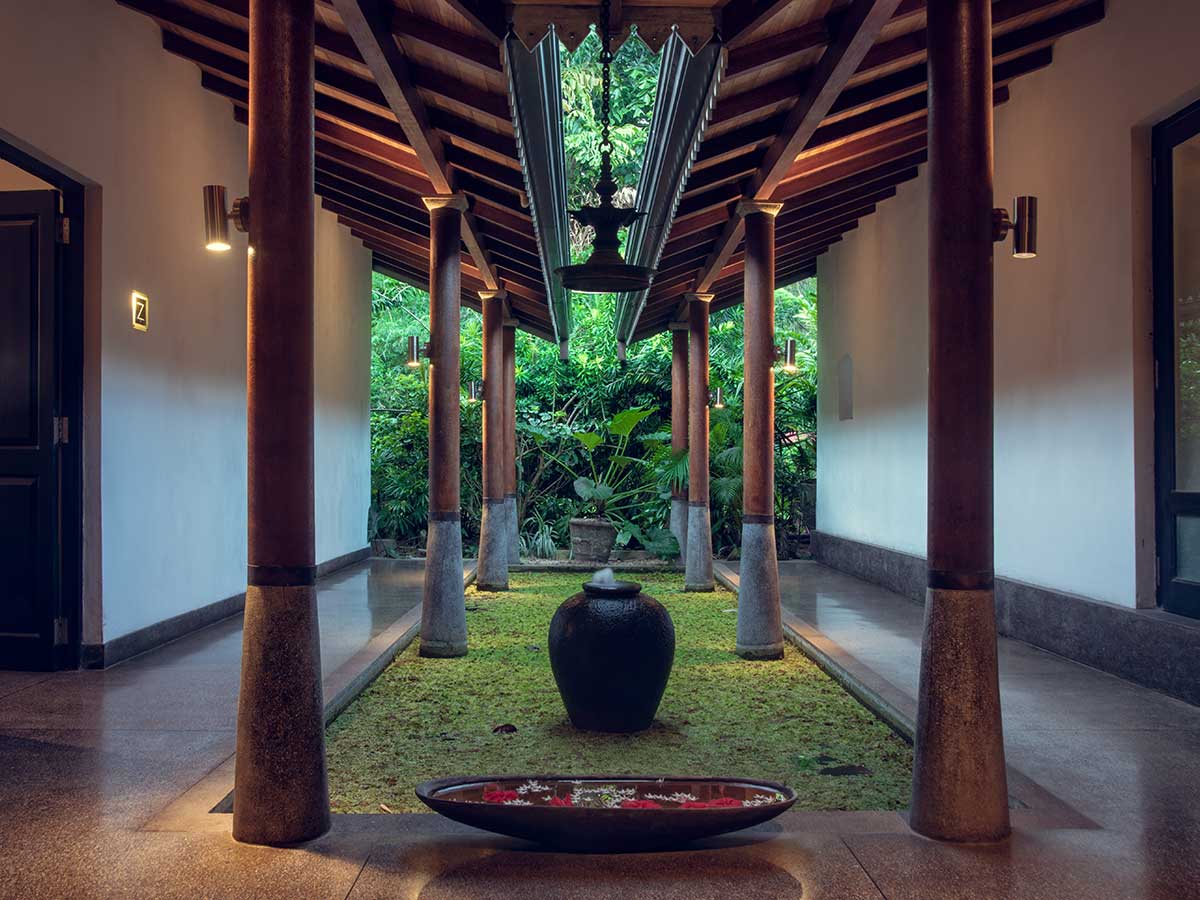
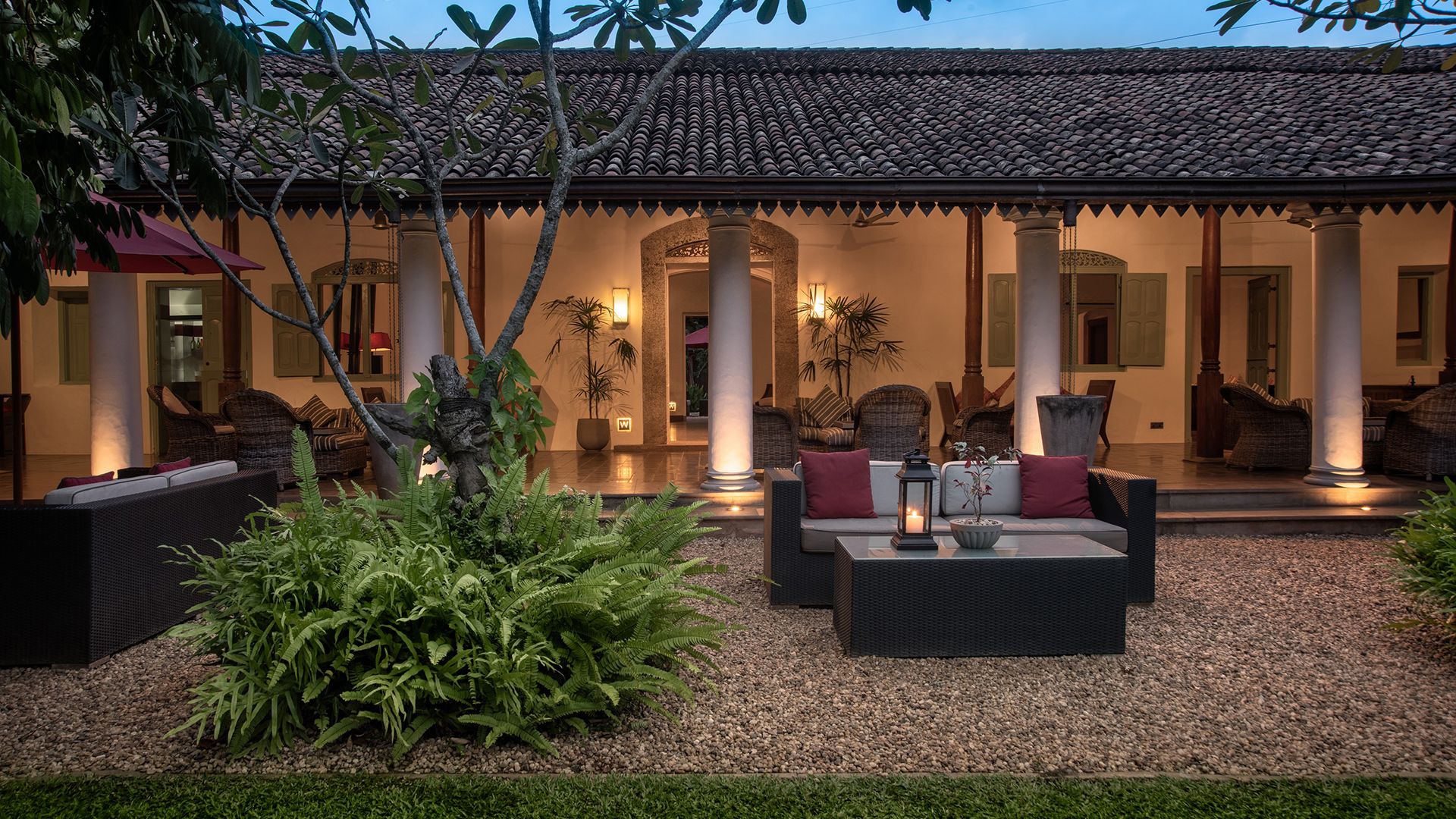
In Sinhala, 'Wallawwa' (Wa-lau-wa) denotes an aristocratic manor house, and the Wallawwa at Kotugoda is the oldest of its kind in the region. Built in the 18th century in the rectangular, broad-verandaed Dutch warehouse style, it was first home to the Head Chieftain of Galle and later occupied by Lord Mountbatten and the Royal Air Force as a base for the South-East Asia Command during the Second World War. The original layout was preserved through restoration. Each of its eighteen rooms still opens onto verandas that ran the building's length two hundred years ago.
Pause for Afternoon Tea on Wallawwa's Veranda
At 3.30 every afternoon, Wallawwa serves tea on its open verandas — the same galleries that wrap the manor house on both sides, the same hour the original owners would have observed two centuries ago. The tea is Ceylon, of course: a Sri Lankan hallmark since the 1860s, when a coffee blight forced highland planters to switch crops and James Taylor planted the island's first tea estate. It comes with biscuits and cake. The hour to five is unhurried. Bring a book — or don't, the gardens are conversation enough.
Sample Local Spirits at Wallawwa's Social Hour
Between five and six every evening, Wallawwa pours a complimentary social hour on the veranda — a daily ritual featuring local rum, vodka, gin, beer, house wines, and one of the property's house cocktails. The local rum is particularly worth trying: Sri Lankan arrack, distilled from coconut palm sap and aged in halmilla wood, is one of the oldest spirits in the world, predating Caribbean rum by several centuries. Liquor isn't served on government-declared dry days, which fall on certain Buddhist holidays — a small but characteristic Sri Lankan rhythm. Otherwise, the hour belongs to you.
EXCURSIONS
Discover Colombo's Four Faiths by Tuk-Tuk
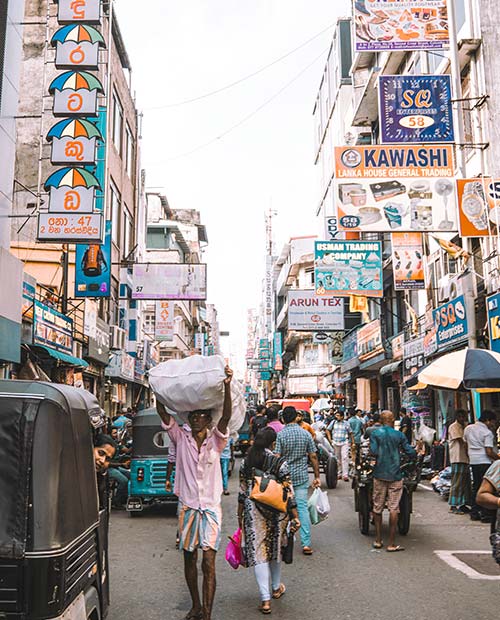
Colombo's character is in its layering. Sri Lanka's commercial capital — densely packed, port-shaped, colonial-marked — holds within a single morning a Hindu pooja at the Sivan Kovil, a visit to the iconic Red Mosque at Pettah (whose red-and-white striped facade is unlike any other on the subcontinent), the bell-shaped Sambodhi Chaithya stupa near the port, and a blessing at the Kochchikade Church. You'll do it all by tuk-tuk in three hours. Shoulders and knees should be covered at each place of worship — the gentlest possible introduction to the religious pluralism that has defined this port city for five centuries.
Boat to Negombo's Lellama Fish Market
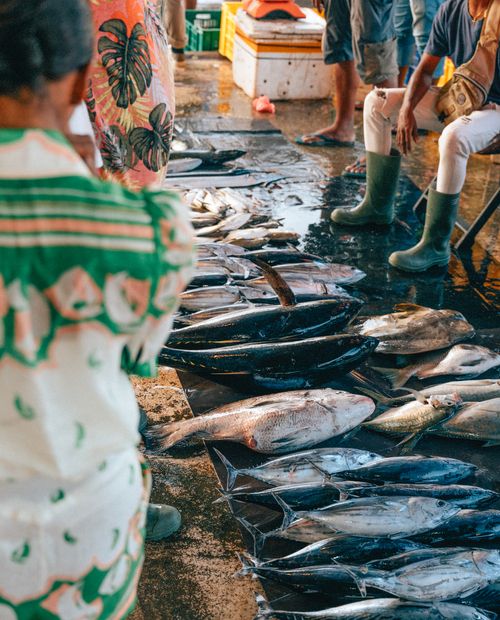
Negombo Lagoon is one of Sri Lanka's most productive coastal ecosystems — a vast brackish-water system fed by the Hamilton Canal, a 14.5-kilometre channel cut in the 15th century under King Parakramabahu VIII and re-dug by the Dutch in the 17th century to ship cinnamon to the port. You'll drift its mangrove channels in a covered boat — Red Mangrove stilt-roots forming the lagoon's living nurseries — past fishermen, swimming macaques (Sri Lanka's only swimming monkey), and resting water monitors. The journey ends at the Lellama, Negombo's vast fish market, where the catamarans land the morning catch.
Cook Sri Lankan Rice and Curry in a Clay Chatty
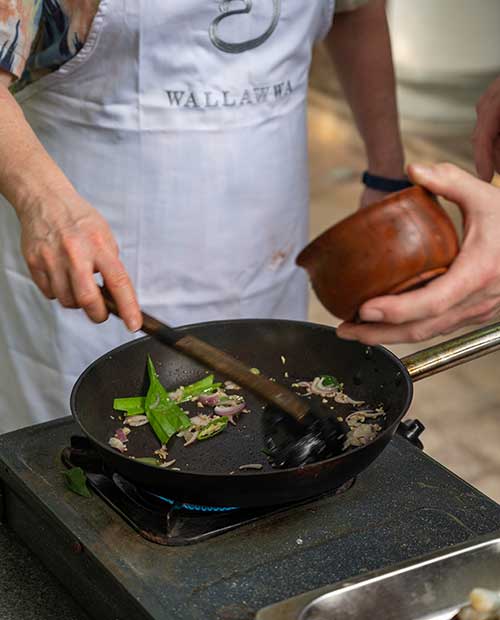
Sri Lankan rice and curry — the country's national meal — depends on two things outsiders rarely see: the spice blend ground fresh that morning, and the clay 'chatty' pot in which each curry slowly cooks. These unglazed earthenware vessels have been used across the island for centuries, and Sri Lankan cooks insist that no metal pan reproduces their flavour. You'll spend the morning with Wallawwa's chef preparing perhaps three or four curries — a dhal, a seasonal vegetable, a fish or chicken — using vegetables he selects from the property's garden. The recipe book is yours to keep.
Coming Soon.